

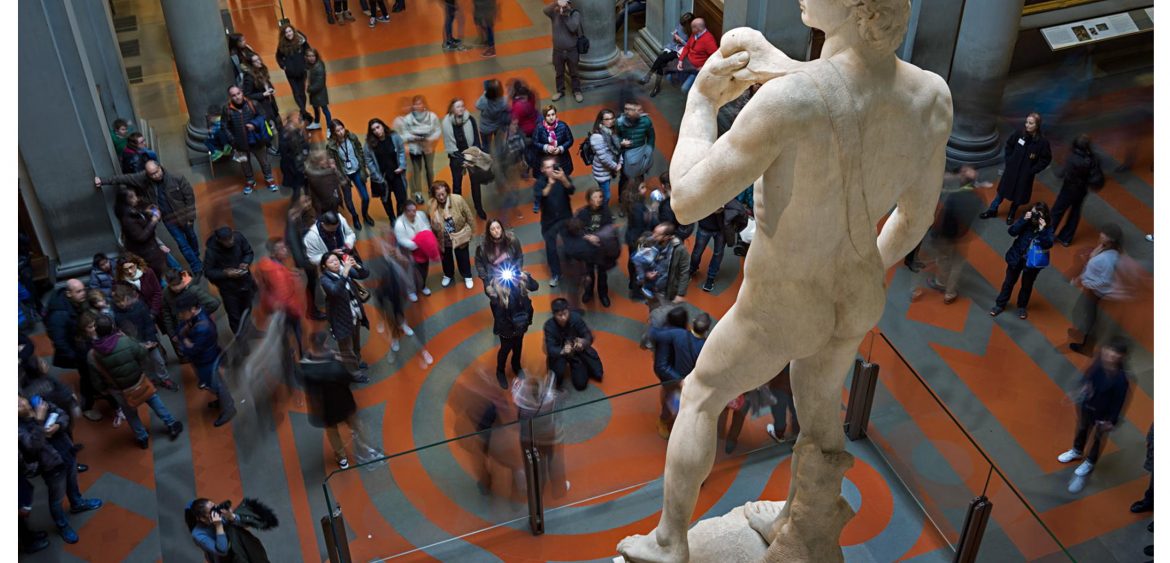

两百万年前旧石器时代,当我们的祖先们用硬石碰砧出斧形器时,他们绝不会意识到这标志着人类物质文化发展阶段之门就此开启。一万七千年前,当一群原始人在拉斯科洞穴的岩壁上敲刻涂绘出气势磅礴的狩猎岩画时,他们也不会想到人类开始迈出了按照美的规律创造艺术精神产品的步伐。五千年前,古埃及的工匠们在坚硬的阿斯旺红色花岗石上雕刻出法老像时,他也不会认识到身后灿烂的古埃及文明为人类文明的发展进程起到了重大的推动力。同时当华夏良渚的工匠们琢出玉琮时,他们也不可能会想到玉将成为华夏文明品德及理想追求的精神之器。两千五百多年前当古希腊雕塑家菲狄亚斯雕刻完成巴底农神庙巨大的雅典娜神像时,他也不会意识到古希腊民主智慧的圣火将照亮未来人类文明进程的发展。一千多年前南太平洋复活节岛帕努伊工匠们雕琢出巨人石像时,他们也不会曾想到多年后考古学家们会非常费解的去例证这些巨石像究竟是不是天外来客造的阵式。五百多年前当米开朗基罗一边说着他的工作就是将石头里的人释放出来一边完成了健硕的大卫像时,他肯定不会料到在二十世纪每天来此朝拜此像的世界各地游客为佛罗伦萨带来多少财富。
石材是永恒的,
石刻艺术是人类文明的奠基石。
石刻艺术是人类艺术史的里程碑。
Two million years ago, during the Paleolithic era, when our ancestors struck hard stones against an anvil to fashion axe-like tools, they could hardly have realized that this act opened the gateway to the development of human material culture. Seventeen thousand years ago, when a group of prehistoric people etched and painted magnificent hunting scenes onto the walls of the Lascaux Cave, they could not have known that humanity had begun to take its first steps toward creating artistic, spiritual works guided by the principles of beauty. Five thousand years ago, when ancient Egyptian artisans carved the likeness of a pharaoh from the hard, red granite of Aswan, they could not have foreseen that the brilliant civilization they represented would serve as a powerful catalyst for the advancement of human civilization as a whole. Similarly, when the artisans of the Liangzhu culture in China crafted *cong* (ritual jade tubes), they could not have imagined that jade would eventually become a symbol of the moral virtues and lofty ideals cherished by Chinese civilization. More than two thousand five hundred years ago, when the ancient Greek sculptor Phidias completed the colossal statue of Athena for the Parthenon, he could not have realized that the sacred flame of Greek democratic wisdom would go on to illuminate the future course of human civilization. Over a thousand years ago, when the Rapa Nui people of Easter Island in the South Pacific carved their monumental stone figures, they could not have guessed that, centuries later, archaeologists would find themselves deeply puzzled, even questioning whether these statues might have been arranged by visitors from beyond our world. More than five hundred years ago, when Michelangelo—who once remarked that his work consisted of “freeing” the figures trapped within the stone—completed his robust statue of *David*, he surely could not have anticipated the immense wealth that the throngs of visitors from across the globe, arriving daily in the twentieth century to behold the masterpiece, would bring to the city of Florence.
Stone is eternal.
The art of stone carving is a cornerstone of human civilization.
The art of stone carving is a milestone in the history of human art.
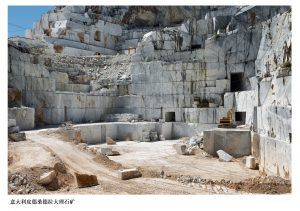
众所周知,石材有着不同的硬度。从古至今随着雕刻工具及雕刻技术的不断进步变化雕塑作品的风格也异彩纷呈。当然这是在人文和艺术史发展的大背景之下。柔软的石材可以刻出精致的细节,坚硬粗颗粒石英石材总是益于表现厚重淳朴的意像。远古时代的工匠们在青铜和铁器没发现之前只能用硬石敲击,刻制出粗犷、古朴的狩猎的场景。古埃及的工匠对于石材有着惊人的工艺技术,许多工艺手段至今仍是神秘的谜团。他们打制石灰石主要是用铜錾和石錾。花岗石类则用钻石錾,铜合金錾,使用粗沙石磨形,抛形则用细磨石打磨。今天我们在近距离观赏古埃及花岗石雕刻时会看到在挺拔的人形之下,手工一寸寸磨出平整讲究的造型。那种手工磨出的面和线,可以感受到工匠的生命己侵蚀在雕像之中,庄严而神圣,令人叹服。这是在今天机械时代难以启及的境界。中国古代早期制玉的方法也是以石攻石,所谓"他山之石可以攻玉","切、磋、琢、磨"工艺四法使得玉材成形,打磨抛光后发出凝脂状的光泽。现在看来史前玉器制作工艺拙朴反而更能衬出玉造型及精神简约大方的气质。自公元前五世纪希腊代达罗斯(Daedlic Period)时代起,希腊的能工巧匠们开始运用Hammer and point方法即长錾冲击的技术打制大理石。他们运用模型坐标找点,利用爪錾整理形体,这个希腊雕刻工艺一直沿用于西方雕刻史中,也使西方写实雕塑通过石材的载体更细腻真实的表现生命的永恒。气动和电动工具的发明是伴随着现代主义雕塑发展的,特别是二十世纪五十年代角磨机的发明以及各类大型工业加工石材机械和刀具的出现为石刻艺术的发展拓展出更大的维度空间。切割和打制,这个雕刻最基本的动作通过机器的运用可以演化出不同的风格和肌理。近年来3D雕刻技术运用于石材也是日新月异,初见成形。相信在不远的将来必会创造出成熟的3D风格石刻艺术。
It is well known that stone varies in hardness. Throughout history, the evolution of carving tools and techniques has given rise to a diverse array of sculptural styles—a development deeply rooted in the broader context of human and art history. Softer stones allow for the execution of delicate, intricate details, while hard, coarse-grained quartz-based stones are better suited for conveying a sense of gravitas and rustic simplicity. In ancient times, before the discovery of bronze or iron, artisans relied on hard stones to strike and carve, creating rugged, primitive depictions of hunting scenes. The craftsmen of ancient Egypt possessed an astonishing mastery of stone—techniques that, in many cases, remain a mystery to this day. They primarily shaped limestone using copper and stone chisels. For granite, they employed diamond-tipped or copper-alloy chisels, refining the forms with coarse abrasives and achieving a polished finish through the use of fine-grained whetstones. When we examine ancient Egyptian granite sculptures up close, we can see how the figures—with their upright, commanding presence—were meticulously shaped, inch by inch, by human hands. In these hand-ground surfaces and lines, one can sense that the very life of the artisan has been imbued into the stone; the result is solemn, sacred, and truly awe-inspiring—a level of artistry difficult to attain in today’s age of mechanization. In early ancient China, the creation of jade artifacts followed the principle of “using stone to work stone”—as captured in the adage, “stones from other hills may serve to polish the jade.” Through the four-stage process of cutting, filing, carving, and polishing, raw jade was transformed into finished forms, glowing with a luster reminiscent of fine, congealed fat. From a modern perspective, the unadorned, rustic craftsmanship of prehistoric jade pieces only serves to better highlight the elegant simplicity and spiritual essence of their forms. Beginning in the 5th century BCE—during the Daedalic period in Greece—skilled artisans began shaping marble using the “hammer and point” technique, which involved striking the stone with long, pointed chisels. By using model coordinates to locate points and employing claw chisels to refine forms—a technique rooted in the Greek sculptural tradition—Western artists have long utilized stone as a medium to capture the eternal essence of life with remarkable nuance and realism. The advent of pneumatic and electric tools paralleled the rise of modernist sculpture; in particular, the invention of the angle grinder in the 1950s, alongside various large-scale industrial stone-processing machines and specialized cutting implements, opened up vast new dimensions for the art of stone carving. Through the use of machinery, the fundamental actions of cutting and shaping can be transformed to produce a diverse array of styles and surface textures. In recent years, the application of 3D carving technology to stone has advanced rapidly, showing great initial promise. It is highly likely that, in the near future, this will lead to the emergence of a mature, distinctively 3D style of stone-carved art.
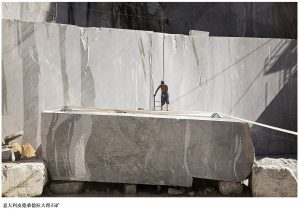
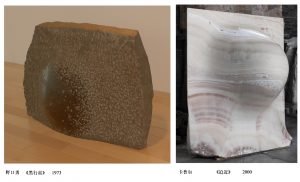
现代主义抽象雕塑时期有两位是最具代表性并且都非常青睐石材雕刻的雕塑家。一位是美国雕塑雕塑家野口勇(Isamu Noguchi 1904-1988)另一位是西班牙雕塑家齐伊达(Eduardo Chillida 1924-2002)。我接触了许多五六十年代出生的西方雕塑家,他们的艺术都多少受到两位雕塑大师的影响,并且不断在两位大师作品中挖掘灵感。时代和环境培养出的一代代艺术家的审美品位确实大有不同。
During the era of modernist abstract sculpture, two figures stand out as the most representative—both of whom held a profound affinity for stone carving: the American sculptor Isamu Noguchi (1904–1988) and the Spanish sculptor Eduardo Chillida (1924–2002). I have encountered many Western sculptors born in the 1950s and 1960s whose work bears the influence of these two masters, and who continue to draw inspiration from their oeuvres. It is clear that the aesthetic sensibilities of successive generations of artists are shaped in significant ways by the times and environments in which they live.
由此出现的艺术作品也会有其时代特征,并且又是很难摆脱时代印迹的。这是非常有趣的现象。再有一点就是艺术家的作品特征其实是很难变化的。一般来说在二十至三十岁就基本定形。最近看两位雕塑家安尼什·卡普尔和安东尼·格雷姆的演讲视频也印证了这点。他们还没出道之前的作品就有后来发展的痕迹。看得出起点的坐标。
The resulting artworks inevitably bear the hallmarks of their era—imprints of the times that are remarkably difficult to shed. This is a truly fascinating phenomenon. Furthermore, the defining characteristics of an artist’s work rarely undergo significant change; generally, they become firmly established by the time the artist is in their twenties or thirties. Recent lectures by sculptors Anish Kapoor and Antony Gormley confirm this: even in their early, pre-career works, one can discern the seeds of their later development—the coordinates of their starting point are clearly visible.
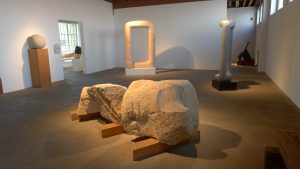
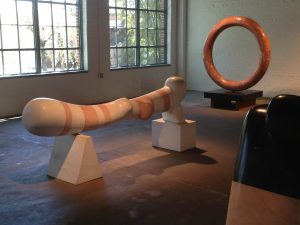
野口勇和齐伊达的作品国内大家都已熟知。我在此谈谈曾经参观两位艺术大师个人美术馆的感受。野口男个人美术馆(Isamu Noguchi Garden Museum)位于纽约东皇后区的长岛。主要是两层的楼房的陈列展厅和小部份的花园。看个人美术馆就如同艺术传记片。石材是野口勇60多年抽象雕塑生涯的主要材料。日本传统艺术的精神以及几何抽象元素中总是伴随着内在生命从石中
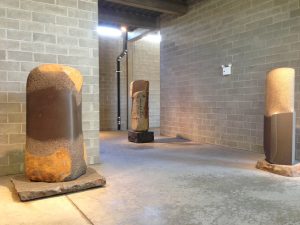
生长涌动。这样有机与几何形态应该是与超现实主义和布朗库西以及阿尔普影响有关的。在展厅里我想起了日本料理家们经常说的一句话:要尊重你的食材。东方人的眼中物质材料都是有灵性的。野口勇所做的就是挖掘、保持、接近石材的本质和特性。他在石材表现手段上主要是以部分抛光、点錾。保留石材部分原始状态如玄武石的皮、孔洞的痕迹。此外则为突出石材工
艺加工的现代性而拼接的不同颜色石材系列。抛光及拼接工艺精密严合,充满雕塑在空间中的张力。野口勇的雕塑总是会让我想起中国新石器时代的玉器,也许是有东方的血液流淌,始终是含蓄、诗性、哲理的气质。
The works of Isamu Noguchi and Isamu Chida are well-known in China. Here, I would like to share my reflections from visiting the personal museums dedicated to these two great masters. The Isamu Noguchi Garden Museum is located in Long Island City, in the borough of Queens, New York. It consists primarily of a two-story exhibition space and a small garden. Visiting such a museum is akin to watching a biographical film about an artist. Stone served as the primary medium throughout Noguchi’s 60-year career in abstract sculpture. Infused with the spirit of traditional Japanese art and geometric abstraction, his works seem to harbor an inner vitality that surges forth from within the stone. This synthesis of organic and geometric forms likely reflects the influence of Surrealism, as well as the work of Constantin Brâncuși and Jean Arp. Walking through the galleries, I was reminded of a tenet often cited by Japanese chefs: one must respect one’s ingredients. In the Eastern worldview, all physical materials possess a spirit. Noguchi’s approach was to uncover, preserve, and engage with the essential nature and inherent qualities of the stone. His technical repertoire included selective polishing and point-chiseling, while often leaving parts of the stone in their raw, original state—retaining the weathered “skin” or natural cavities of materials like basalt. Elsewhere, he employed the assembly of stones in varying colors, a technique that highlights the modernity of his craftsmanship. The precision of his polishing and joinery creates a powerful sense of tension as the sculptures occupy the surrounding space. Noguchi’s sculptures often evoke the jade artifacts of China’s Neolithic era; perhaps owing to his Eastern heritage, his work consistently embodies a quality that is subtle, poetic, and philosophical.
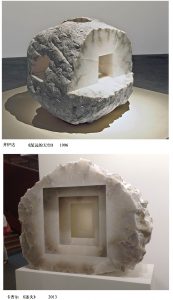
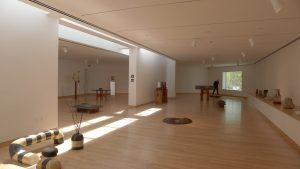
齐伊达的个人美术馆位于西班牙圣赛巴斯蒂安效外16世纪们萨瓦拉加庄园。这里有开阔的的雕塑公园及用于老屋改建的美术馆,完整而充分地展现了大师的毕生创作和成就。奇伊达是学建筑出生,他转而钢铁雕塑,巴斯克铁件传统艺术对他的影响使他的作品性格中有种钢韧的精神。他的石材雕刻注重空间特别是虚空间形态的行进与动力的构造,基本上都是方正直线性形
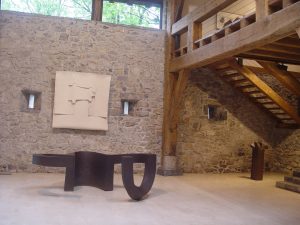
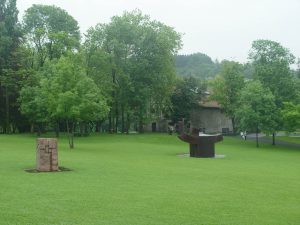
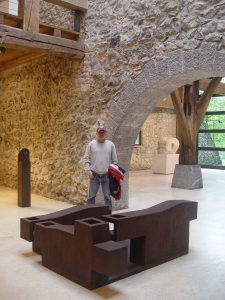
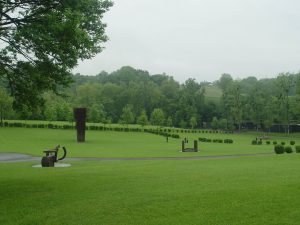
的。很冷的挖出一个方形的内空间并且如石建筑般在光影中行走。极简和几何式的语言带来某种能量和体量的张力。他的石材雕刻基本上是两种内型:十字交叉方孔内凹和石材卯榫构成。在六十年代与海德格尔对话时他说道:我的艺术就是在空间中旅行。在他开阔的美术馆室外空间中确实感受到环境、观者与雕塑相生的时空关系。
Chillida’s personal museum is located on the grounds of the 16th-century Zabalaga estate, on the outskirts of San Sebastián, Spain. Featuring an expansive sculpture park and a museum housed within a renovated historic farmhouse, the site offers a comprehensive showcase of the master’s life’s work and achievements. Originally trained in architecture, Chillida transitioned to creating steel sculptures; the influence of the traditional Basque ironworking craft imbued his work with a resilient, steel-like spirit. His stone carvings focus on the progression of space—specifically the forms of “void” space—and the dynamics of their construction, characterized largely by rectilinear, geometric lines. He would carve precise, square-shaped interior voids into the stone, creating structures that evoke stone architecture as they interact with light and shadow. His minimalist, geometric visual language generates a palpable sense of energy and volumetric tension. His stone sculptures generally fall into two categories: those featuring recessed, cross-shaped square voids, and those constructed using stone mortise-and-tenon joints. During a dialogue with Martin Heidegger in the 1960s, Chillida remarked, “My art is a journey through space.” Within the vast outdoor spaces of his museum, one can truly perceive the symbiotic relationship between the environment, the viewer, and the sculptures themselves.
在现代主义时期雕塑家对于石材是情有独钟的。从现代抽象雕刻先驱布朗库西的直接雕刻开始许多雕塑家都以石材为首选。石材雕刻似乎到了它的高峰期。因为石材很适合抽象主义雕塑。大面及曲线容易表现厚重、简洁等风格及有效的肌理表现。再者大型工业化的加工手段也使得石材雕刻从原先的繁重费时变得简单快速。此外战后三十年公共艺术的蓬勃发展也使石材雕刻有了更多的机遇。六十年代开始的石雕创作营也摧生了更多雕塑家对于石刻的热情。但随着当代艺术的兴起石材雕刻似乎有边缘化的现象。主要是因为当代艺术家以观念先行,材料未必需是永久的。特别是自现代主义始现成材料用于雕塑及装置艺术中。石材和青铜似乎是传统的代名词。当代艺术家倾向于更加赏心悦目的材料以及能够表达观念的现成品拓展出更广阔的艺术空间。也使不同艺术形式之间逐渐变得难以划分。
During the modernist period, sculptors held a special affinity for stone. Beginning with the “direct carving” technique championed by Constantin Brâncuși—a pioneer of modern abstract sculpture—many sculptors favored stone as their primary medium. Stone carving arguably reached its zenith during this era, as the material proved exceptionally well-suited to abstract sculpture; its expansive surfaces and fluid curves lent themselves perfectly to conveying a sense of gravitas and minimalism, while also allowing for the creation of compelling textures. Furthermore, the advent of large-scale industrial processing methods transformed stone carving from a labor-intensive, time-consuming endeavor into a more efficient and rapid process. The flourishing of public art in the three decades following the war also provided fresh opportunities for the medium. Additionally, the emergence of stone-carving symposia, which began in the 1960s, further fueled sculptors’ passion for working with stone. However, with the rise of contemporary art, stone carving has appeared to become increasingly marginalized. This is largely because contemporary artists often prioritize concepts over the permanence of materials—a shift that began in the modernist era with the incorporation of “found objects” (readymades) into sculpture and installation art. Stone and bronze have come to be synonymous with tradition; in contrast, contemporary artists often gravitate toward more visually striking materials or existing objects that can effectively articulate specific concepts, thereby expanding the horizons of artistic expression—a trend that has also made the boundaries between different art forms increasingly difficult to define.
我以为当代艺术应该是艺术家的态度,而不是风格化的表现。材料也不应该有过时之说。雕塑家在当代的语境下更有纯粹性。虽然石材在人类艺术之前到如今已有几百万年的历史,但它的艺术始终会给我们带来惊喜。
I believe contemporary art should be an expression of an artist’s attitude, rather than a stylized performance. Furthermore, the notion that certain materials are “outdated” should not exist. Within a contemporary context, sculptors possess a unique sense of purity. Although stone has been used in human artistic endeavors for millions of years—dating back even further than the formal concept of “art”—it continues to surprise us to this day.
博伊斯晚年作品《橄榄石》,他在给石槽盖面灌注橄榄油,虽然石槽是冰冷无生命的概念,但与油相接后就有了生命生长的意义。人影反映在石·油上给人们带来宁静而深沉的美感。那种材料的变化带来的是直抵内心的震憾,难以用语言描述。
In his later work *Olivestone*, Joseph Beuys pours olive oil into the recesses of stone troughs. Though these stone vessels are cold, inanimate concepts, their contact with the oil imbues them with a sense of living growth. The reflection of human figures upon the stone and oil evokes a serene, profound aesthetic. This transformation of materials delivers an impact that resonates deep within the soul—a sensation difficult to capture in words.
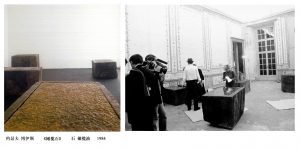
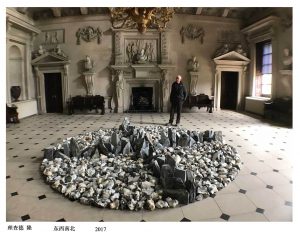
理查德·隆(Richard Long)是一位行走于野外的大地艺术家。他将行走和雕塑结合起来,自然世界的石材直接运送到文明世界的美术馆经过各种几何组合自然的板岩转化为作品的灵魂力量。自然的生命在作者膜拜仪式中成为单纯然颇具强力。朴素而意味深长。
Richard Long is a land artist who traverses the wilderness. He integrates walking with sculpture, bringing stones from the natural world into the galleries of the civilized world. Through precise geometric arrangements, these natural slabs are transformed into works imbued with a profound, soulful power. In what resembles a ritual of reverence, the artist reveals the life of nature—manifesting it as something both elemental and remarkably potent. It is work that is at once simple and deeply meaningful.
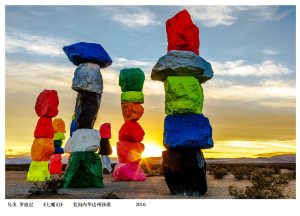
瑞士艺术家乌戈·罗迪尼(Ugo Rondinone)去年在美国内华达州沙漠里用巨大石材装置了公共景观作品。名为《七魔山》由七组巨型雕塑组成,将石块重叠有10米高并且每块石头喷涂上色彩明亮的荧光色。将自然界的石材以人工色彩修饰,在沙漠中产生魔幻而有诗意的效果。
Last year, Swiss artist Ugo Rondinone installed a public landscape piece in the Nevada desert in the United States. Titled *Seven Magic Mountains*, the work consists of seven large-scale sculptures, each formed by stacking massive boulders to a height of 10 meters. The stones are painted in vibrant, fluorescent colors—a human-made intervention that transforms natural rock into something magical and poetic within the desert landscape.
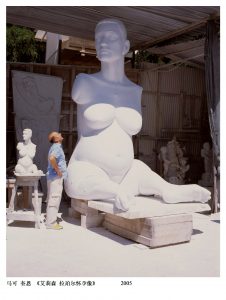
当然传统的石刻技法在当代艺术中也始终是当代雕塑家的力器。在意大利的皮特勒桑塔(Pietrasanta),曾经的世界石刻之都,许多世界各地的艺术家在此加工制作他们的作品。英国雕塑家马克·奎恩(Mark Quinn)的石雕作品《艾莉森·拉珀尔怀孕像》(Alison Lapper Pregnant)完全是如同古希腊罗马雕塑般的大理石像。但表现的是不够完美的残疾人,这是他艺术观念的态度。挑战所谓"英雄"与"完美"的概念,借用完美的大理石纪念碑方式表现"不够完美""不够崇高"的社会边缘。反过来则是对所谓完美的批判。
Naturally, traditional stone-carving techniques remain a powerful tool for contemporary sculptors. In Pietrasanta, Italy—once the world’s capital of stone carving—artists from across the globe gather to craft their works. The marble sculpture *Alison Lapper Pregnant* by British artist Marc Quinn is executed in a style reminiscent of ancient Greek and Roman statuary; yet, by depicting a person with a disability—a figure deemed “imperfect”—Quinn articulates a distinct artistic philosophy. He challenges conventional notions of the “heroic” and the “perfect” by employing the grand, monumental language of classical marble sculpture to represent those on the margins of society—individuals who might be perceived as “imperfect” or “less than sublime.” In doing so, he offers a pointed critique of what is traditionally defined as “perfection.”
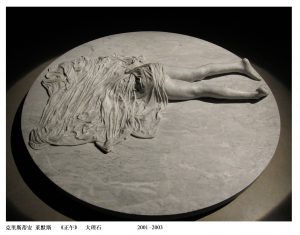
德国雕塑家克里斯丁·莱默茨(Christmas Lemmerz)完全采用希腊雕刻的方法表现超现实血腥的人体雕塑。人体在古典主义氛围中,白色卡拉拉大理石从写实转变为难以接受的超现实表达。他认为有效的艺术应该是有对抗性的。大理石古典主义的永恒机体与破坏消失的对抗。观者在视觉和触觉中身体和心理体验参与其中。
German sculptor Christian Lemmerz employs traditional Greek carving techniques to create surreal, visceral, and blood-soaked figurative sculptures. Within a framework of classical aesthetics, he transforms white Carrara marble—shifting it from realism into a surreal, often unsettling mode of expression. Lemmerz posits that effective art should be inherently confrontational; his work stages a conflict between the eternal, classical form of the marble and its own destruction or dissolution. Through both visual and tactile engagement, the viewer is drawn into a profound physical and psychological experience.
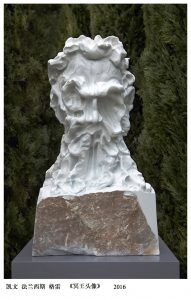
上个月在纽约佩斯画廊展出英国雕塑家凯文·法兰西斯·格雷(Kevin Francis Gray)的大理石作品。他认为泥是有生命的而大理石可以重生。这次展览他将一系列很有泥性的雕塑在意大利皮特勒桑塔打制成大理石后展出。这样的材料反转产生出艺术家雕塑行为的力量,好似在石上有泥的柔软并纪录了艺术家手在雕塑上的痕迹,一种未完成并随时可能被摧毁的状态。
Last month, Pace Gallery in New York presented a collection of marble works by British sculptor Kevin Francis Gray. Gray views clay as a living substance, while marble, to him, represents the possibility of rebirth. For this exhibition, he created a series of sculptures—possessing the distinct, tactile qualities of clay—which were then carved into marble in Pietrasanta, Italy. This inversion of materials amplifies the power of the artist’s sculptural process; the stone takes on the soft, malleable character of clay, preserving the traces of the artist’s hands—a state that appears unfinished, as if the work could be destroyed at any moment.
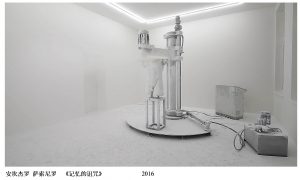
意大利雕塑家安坎杰罗·萨索尼罗(Arcangelo Sassolino)的作品不同传统上雕塑的形式,他用工业机器装置的力量来完成作品,展示工业机器与人文主义冲突的关系。去年他将一件古典大理石躯干放在碾磨机上以2900转/分旋转碾磨。完美的石像转变成一片朦胧的石粉。石刻的形象乃至于广义上的里格尔所提出的"纪念碑性"符号象征,在各个历史进程,宗教、政治、权利等的冲突中集体记忆总是反复抹去,破坏和磨损。而另一方面挑战"纪念碑"的权威性又是历史文明发展的必然作用。
The work of Italian sculptor Arcangelo Sassolino departs from traditional sculptural forms; he employs the power of industrial machinery to create his pieces, thereby highlighting the conflict between industrial apparatus and humanism. Last year, he placed a classical marble torso onto a grinding machine, subjecting it to rotation at 2,900 revolutions per minute. The perfect stone figure was transformed into a hazy cloud of stone dust. Throughout history—amidst the clashes of religion, politics, and power—the imagery of stone sculpture, and indeed the broader concept of “monumentality” (as articulated by Alois Riegl), has been repeatedly erased, destroyed, or worn away from our collective memory. Conversely, challenging the authority of the “monument” is an inevitable aspect of the evolution of historical civilization.
从旧石器时代直立人热情于打制石器开始,原始人对于打制出的形体以及使用把玩后后的材料润物之美的喜爱也逐渐一代代注入并繁衍出人类对于石偏爱的基因。这是人性和物性相通和依存的力量。石刻是会带来愉悦的,这是远古流淌下来的遗传基因。它是人可以控制坚硬石材后的满足感,它是石材在光影迷离的幻觉感,它是石材抛光后触摸如同肌肤的喜悦感。参加创作营的同行们都会有那样的感受:一旦机器开动,精力饱满,全神贯注,大切割机切下一块块碎石,成就感不断涌现。看着切出平整的大面,欣喜满足。结束完一天的活,吃着烤肉,品着佳酿,甩着发酸的胳膊,揉着发麻的手掌,和来自世界各地的同行嗐侃,真是快活…。
Ever since *Homo erectus* in the Paleolithic era first took a keen interest in crafting stone tools, early humans developed an enduring affection for the forms they created and the subtle, evolving beauty that emerged from handling and interacting with these materials. This affinity was passed down through generations, becoming, in effect, a genetic predisposition—a deep-seated human preference for stone. It is a testament to the profound connection and interdependence between human nature and the nature of the material itself. Stone carving brings a unique form of pleasure—a legacy flowing from the depths of our ancient past. It is the satisfaction of mastering a hard, unyielding substance; it is the way stone plays with light and shadow to create ethereal, dreamlike illusions; and it is the tactile delight of a polished stone surface, smooth and sensuous to the touch, much like human skin. Those who participate in these creative workshops know the feeling well: once the machinery roars to life, one becomes fully energized and utterly absorbed in the task. As the large saws slice through the stone, a growing sense of accomplishment takes hold. There is a profound joy in revealing a vast, perfectly flat surface. At the end of a long day’s work—while enjoying a meal of grilled meat and fine drink, shaking out aching arms, rubbing numb palms, and chatting animatedly with fellow artists from every corner of the globe—one finds a truly pure and simple happiness.
2017年4月于牧马山
April 2017, at Muma Mountain
